Believe it not, Saskatoon was once home to two ski areas, not counting nearby Mt. Blackstrap, a.k.a. The Pimple of The Prairies. But what’s even more remarkable is that Saskatoon is now home to a roaring little ski centre that has already far surpassed the promise that’s so inherent in its good name: Optimist Hill.
Optimist Hill, Saskatchewan
Go Play Outside!
Ski Hill:
Optimist Hill
Location:
Saskatoon, Saskatchewan
Vertical:
21 m (70 ft.)
Snowfall:
90 cm (35 in.)
Map:
Find us here
Skiing In Saskatoon: The Early Years
Despite having terrain that’s about as flat as a pancake, skiing (On snow!) has enjoyed a remarkably robust following here since 1929. That was the year the Saskatoon Ski Club (SSC) was founded to serve skiers in what’s known as the ‘Paris of the Prairies’. That same year, the SSC asked the University of Saskatchewan for permission to build a ski jump at Devil’s Dip on the banks of the Saskatchewan River. Permission was granted but, the following winter, officials closed the site after an unfortunate jumper accidentally broke his leg and the university withdrew its support. Undaunted, the Saskatoon Ski Club built an even higher jump, off campus, and just few hundred yards north of the original site. Dave Wood used the new, 18‑metre facility to full-effect when he set a hill record with a magnificent 29.7‑metre (97‑foot) leap. With its tongue planted firmly in cheek and a nod and a wink to the past, the Saskatoon Ski Club named their new hill the ‘Varsity Site’.
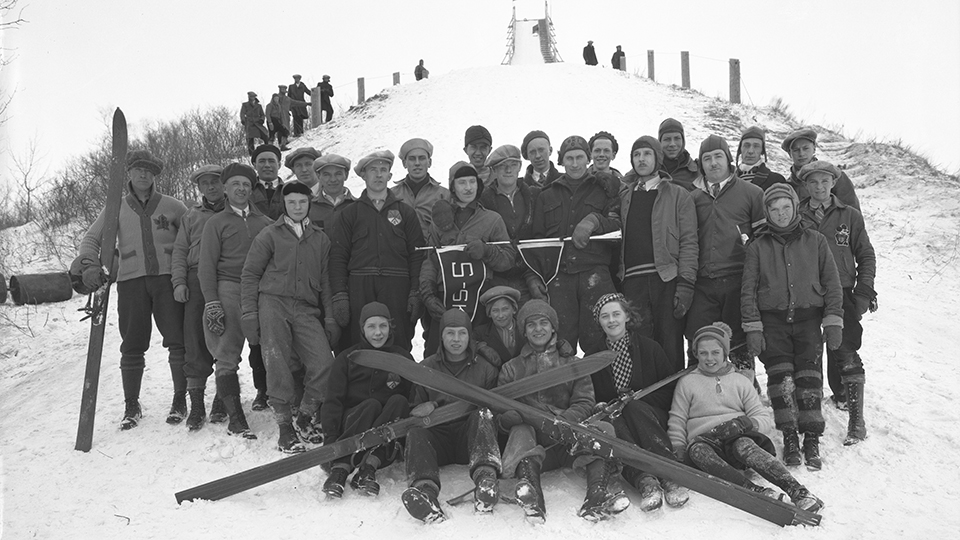
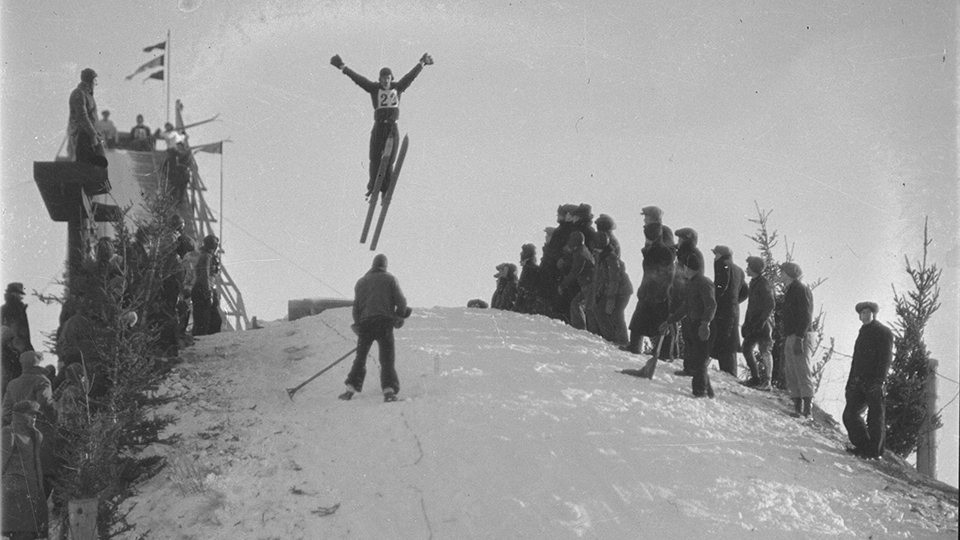
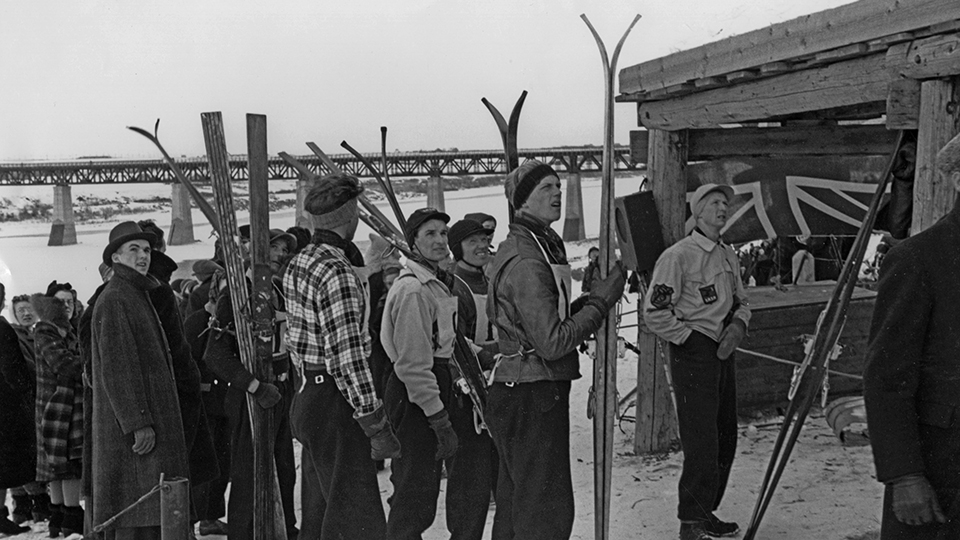
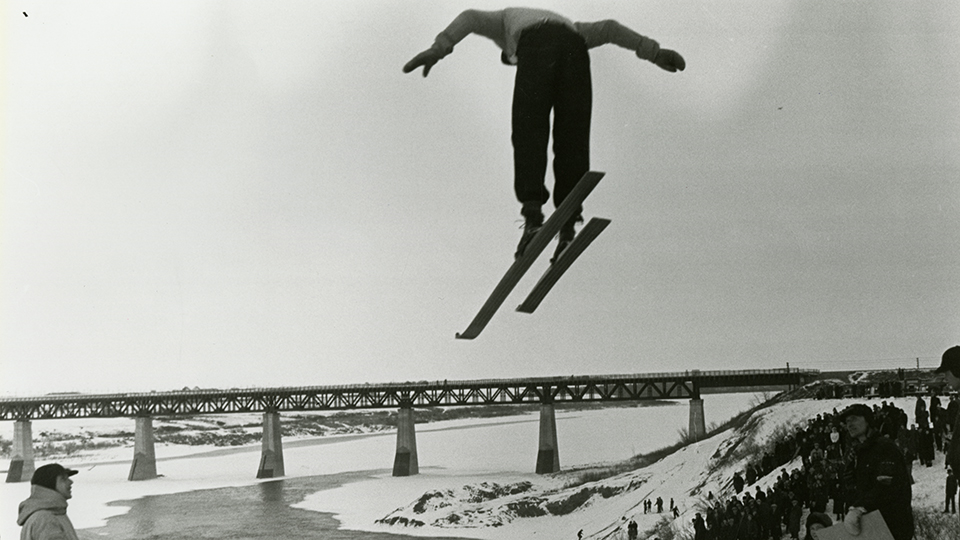
Photos ID #a-1169, #lh-5310, #lh-5545 and #lh-5546 courtesy of Saskatoon Public Library.
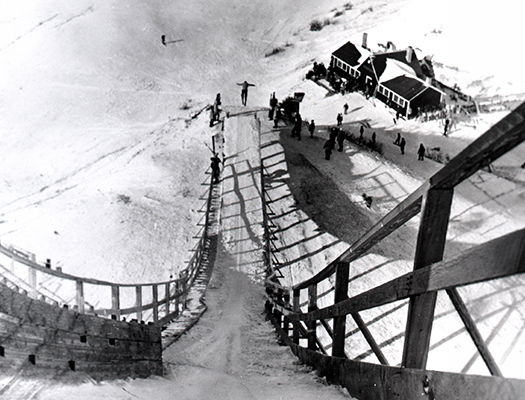
The Saskatoon Ski Club’s new Varsity Site elevated skiing in Saskatchewan to new heights, drawing fearless competitors and loyal fans alike.
Nordic And Alpine Skiers Learn To Share And Share Alike
Eventually, some alpine trails were cut next to the jumping hill, and a toboggan run was added. Visitors could warm up and replenish themselves inside the clubhouse that was built alongside the new 25‑metre tower. By 1936, the Varsity Site was drawing weekend crowds of up to 2,500 spectators. The entire facility became known as Ski Jump Coulee. (Coulée is a French word that means ‘flow’. Here, it also refers to sloped banks that have been formed or shaped by running water, e.g. a river. Understandably, coulee or riverbank skiing is HUGE in the Prairies.) Fittingly, the SSC’s new jump was the highest ever built in Western Canada and would thus forever cement Saskatoon’s place in Canadian skiing folklore and history.
As One Hill Succeeds, Another Fails
In 1971, when it was announced that Saskatoon was officially named host of the Canada Winter Games, most Canadians began scratching their heads in wonder. Clearly, they hadn’t yet seen the city’s monumental We’re Building a Mountain campaign. Or, more likely, they totally underestimated good old Prairie pluck, ingenuity and resolve. In any event, in 1970, the federal government hired work crews and sent them to nearby Dundurn, a small community just 51 kilometres south of Saskatoon.
The lessons learned in transforming this gentle Dundurn slope into Mount Blackstrap would prove invaluable in building Saskatoon’s Optimist Hill.
Photo ID #cp-5959-3 courtesy of Saskatoon Public Library.
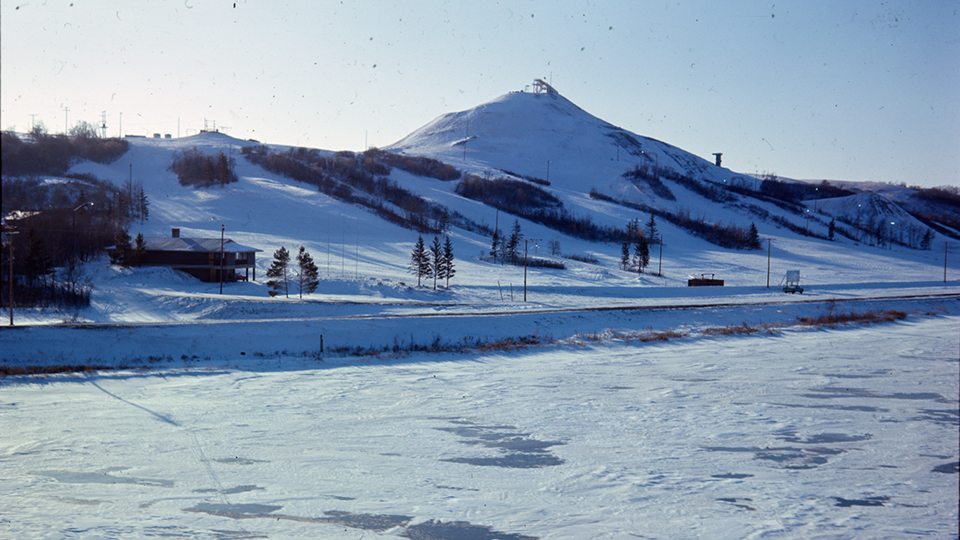
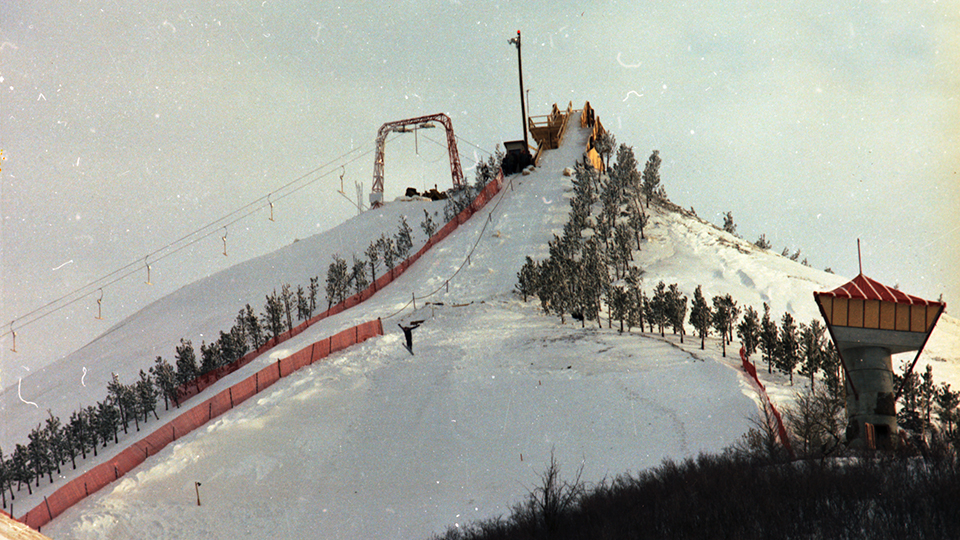
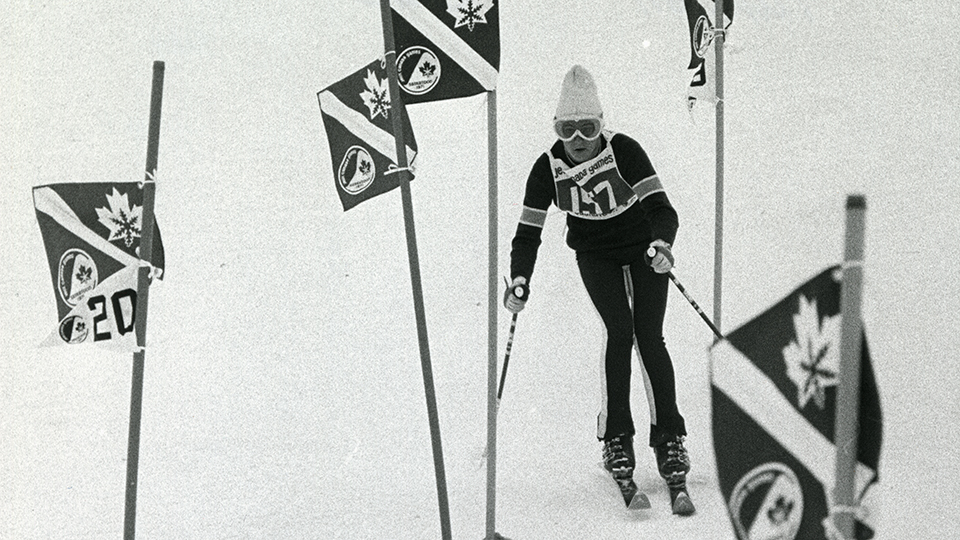
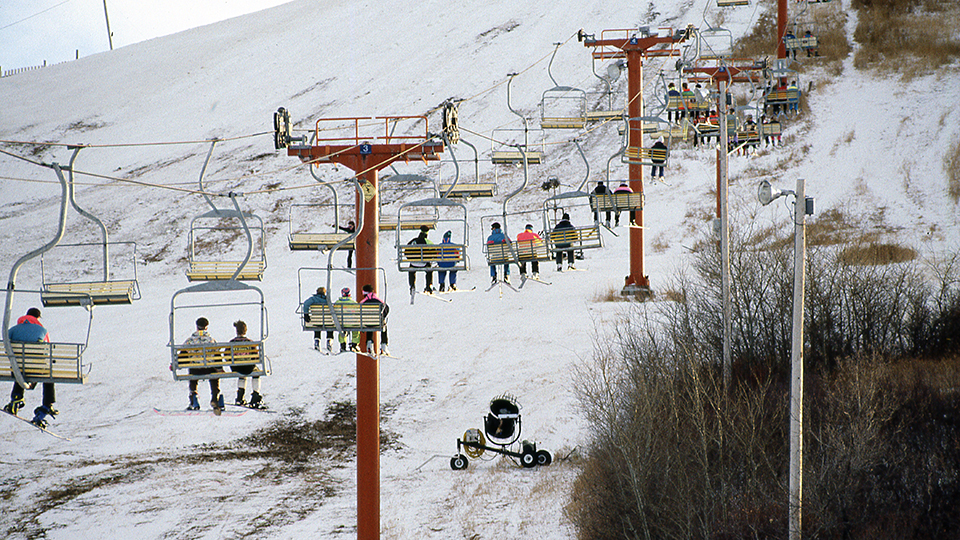
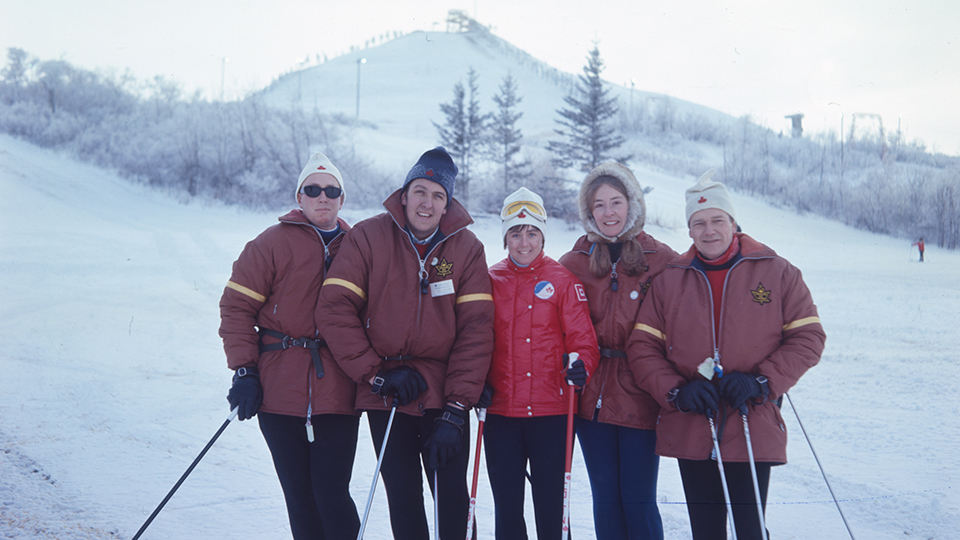
Photo ID #cp-6028-15, #cp-6028-8, #lh-7275-v-1, #af017-0096 and #cp-6028-1 courtesy of Saskatoon Public Library.
One Man’s Garbage Is Another Man’s… Mountain?
While critics had a field day lambasting government waste, landscaping crews methodically excavated a nearby escarpment and then used the earth to transform a nearby, gentle slope into the far more formidable Mt. Blackstrap. To this day, legend persists that Mt. Blackstrap was built out of human detritus, i.e. garbage. Unmoved, Prairie Pride ruled the day. The Games were a smashing success and Mt. Blackstrap immediately supplanted Ski Jump Coulee as THE place where Saskatoon came to ski and play and have some serious outdoor winter fun!
“Mt. Blackstrap also had a ski jump, making the riverbank facility redundant. Ski Jump Coulee was closed in 1974 and demolished in 1978. If you venture off the trail, you can still see remnants of the jump’s footing and tow lift.”
– Todd Harms, General Manager/Operations Manager, Optimist Hill
Once Again, The Torch Changes Hands
Despite its promising debut, first‑rate ski patrol and top‑notch ski school, Mt. Blackstrap floundered under various owners until it was finally shut down in 2007. In December 2012, some five years later, on a crisp, Prairie winter day, a member of Saskatoon’s Optimist Club named Ken Cenaiko spotted the ruins of an old ski jump while walking alongside the Saskatchewan River. Intrigued, he asked his fellow Optimists why Saskatoon didn’t have a ski hill anymore. He also pointed out that when his family visited a tubing park in Manitoba they all had good fun. But instead of collectively shrugging their shoulders and muttering ‘sweet nothings, the Optimist Club decided to act. They launched an ambitious six‑year feasibility plan that led them to raise three million dollars towards developing a new, viable ski hill. With tubing lanes. Right here. In Saskatoon.
Without longtime board member, Rob Letts (left) and Joe Van’t Hof (right) the Optimist Hill simply wouldn’t be what it is today.
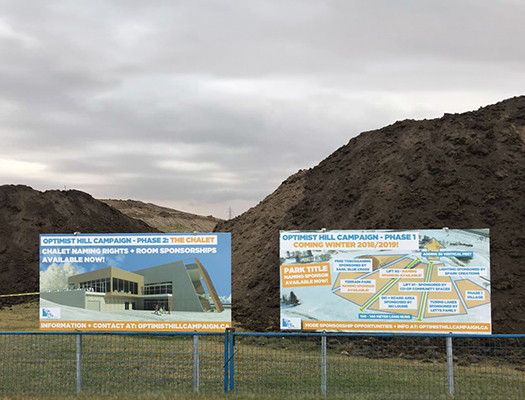
The Optimist Hill project dovetailed perfectly with the City of Saskatoon’s efforts to make people, in particular children, go play outdoors in winter.
A Few Words About The Optimist Club
Founded in Louisville, Kentucky in 1916, the Optimist Club is, according to its Mission and Vision Statements, “recognized worldwide as the premier volunteer organization that values children and helps them develop to their full potential… by bringing out the best in youth, our communities and ourselves.” Call it karma, kismet or just plain good luck but the club’s plan to build an inner‑city ski hill coincided perfectly with Saskatoon’s new Winter City Concept. This recently hatched municipal campaign encouraged residents to become more active and go outside for some exercise and fun rather than hibernating indoors all winter. The Optimist Club’s timing couldn’t have been better.
“It’s a game-changer for kids in Saskatoon. Kids have got to get off the couch, get off the tablets and go play outside.”
– Joe Van’t Hof, Optimist Club Member
More Than A Hill, It’s A Designated Municipal Project
In 2018, the city declared the club’s plan to build a ski hill in Diefenbaker Park a ‘designated municipal project’. It then helped get the proverbial snowball rolling by issuing tax receipts to any individual or corporation that financially supported the new hill. The city also kicked in $685,000. The Optimist Hill Project committee then created the Optimist Snow Park Development Corp. to oversee and manage the entire operation. The following year, workers began transforming Saskatoon’s once modest Diefenbaker Hill into a fun-filled, winter recreational centre with a lift-served ski hill, tubing lanes and a very modern yet cozy base village.
Proof positive that the best laid plans can result in something of lasting beauty and great fun.
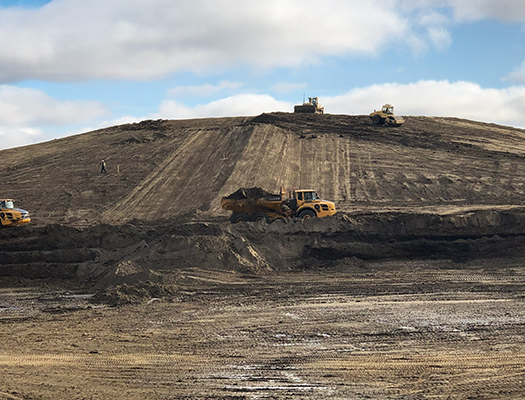
Building a ski hill in Saskatoon took imagination, inspiration, goodwill and a whole lot of earth. 147,000 cubic metres to be exact.
Moving Heaven And Earth
As the builders of Mt. Blackstrap had learned decades prior, creating a viable ski hill in the middle of the Prairies is no small task. Landscapers had to move a whopping 147,000 cubic metres of earth and add an impressive 30 vertical feet to Diefenbaker Hill’s once humble 40‑vertical‑foot‑high summit. Corporate Saskatoon also weighed in with its considerable support. Rather than rent out its trailers to the hill, the 3 twenty Modular company designed and built a permanent, small‑scale chalet. It also kicked in an additional $100,000, and converted two of its rental offices into warm and inviting lodges where visitors could safely stow their valuables. Warm up. Meet their ski or snowboard instructor. Or rent a sliding tube or ski or snowboard gear.
“To see people spending time with their families, with brothers, sisters, with the biggest smiles, enjoying the winter wonderland that we’ve created, there’s nothing that can replace it.”
– Joe Van’t Hof
Optimist Hill: Today…
Last year, Optimist Hill drew some 15,000 skiers, snowboarders and tubers. And they weren’t just fleeting visitors either. When they came, they stayed. And they played. According to Todd Harms, “This is a place where kids will come when the doors open and parents pick them up at the end of the day.” One of those kids was an eager and very talented Maia Schwinghammer who is now a freestyle mogul skier on Team Canada. Today, the Saskatoon Freestyle Club is planning to open a year‑round training zone where future stars can learn and develop their amazing strength and breathtaking skills.
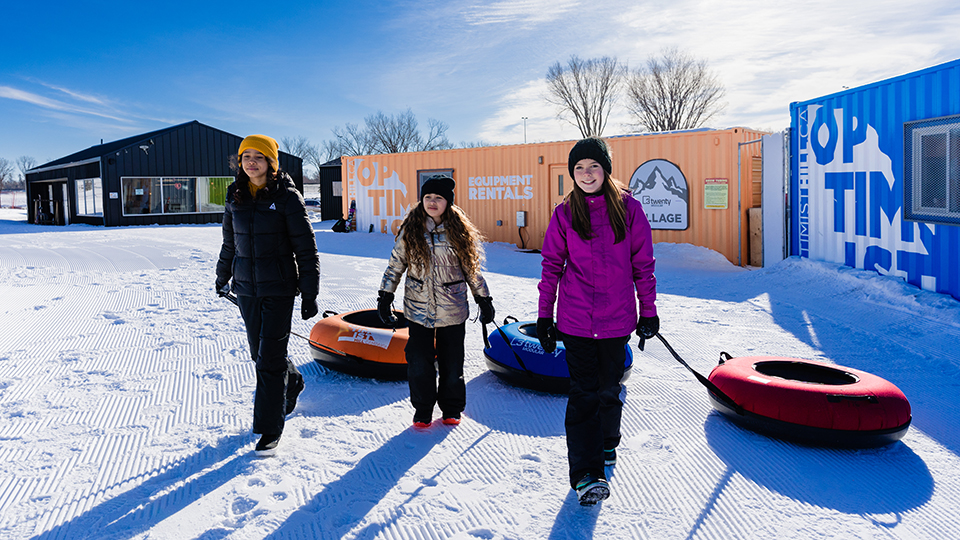
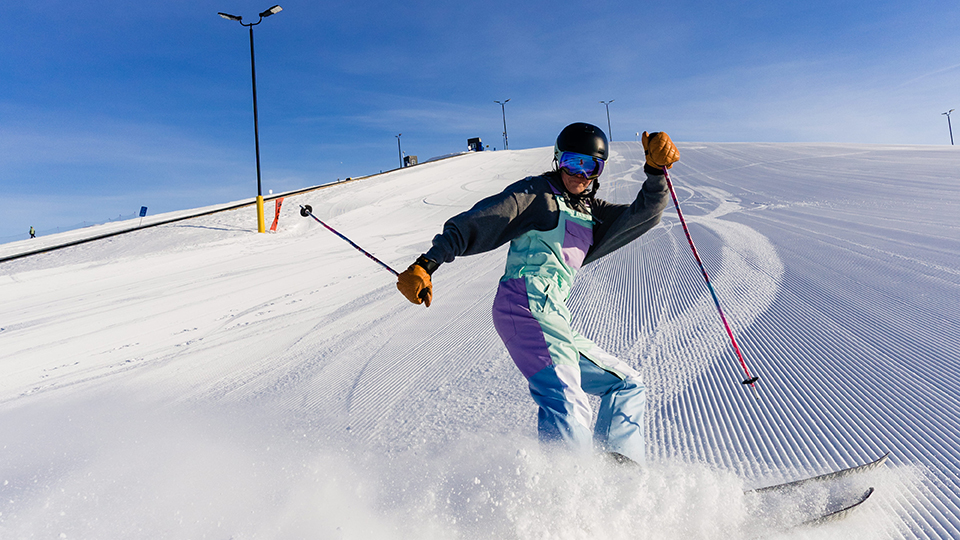
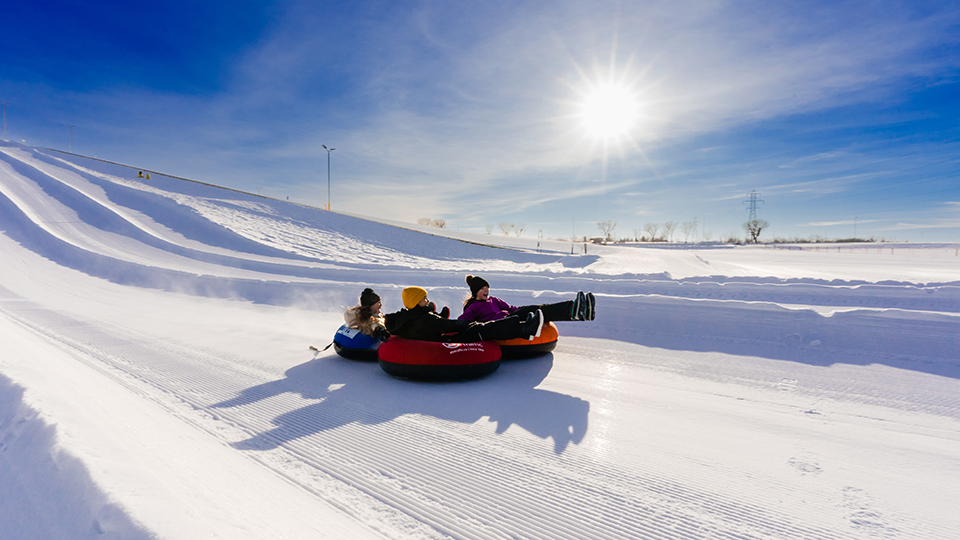
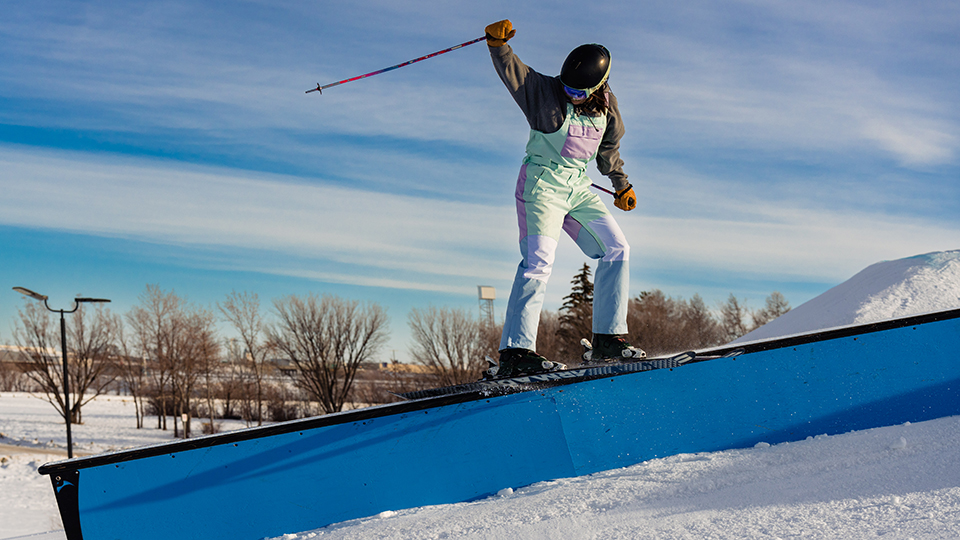

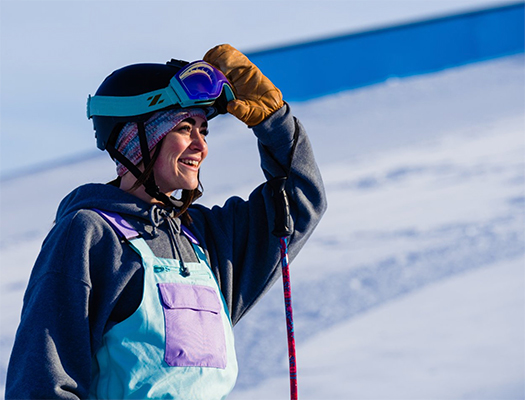
The future has never looked brighter for aspiring skiers and snowboarders in Saskatoon or, for that matter, Saskatchewan.
…And Tomorrow
For the freestyle training group, the new facility will give athletes, coaches and parents the opportunity to expand and develop Saskatchewan’s freestyle ski and snowboarding community. Previously, athletes, particularly those at the elite Team Saskatchewan level, had go outside the province to perform all their training at higher level facilities. That meant missing school, and travelling to Alberta or British Columbia for a week or two at time. The group’s GoFundMe plans to raise $500,000 to fund the project. Given that they’re asking Saskatoon’s skiing community to chip in, they have every reason to be optimistic.
“Our mother would always tell us to give back to your community as it’s the community that helped raise you to the men you are today.”
– Rob Letts, Project Chair, Board of Directors member and co-sponsor of the Letts Family Lanes at Optimist Hill
Blackstrap - The Lost Resorts, Episode 11
Blackstrap ski area, once known affectionately as "The Pimple on the Prairies," serviced the Saskatoon ski market for many decades…
Optimist Hill
View a highlight reel from the 2023/2024 Season at Optimist Hill

Writer: Dave Fonda
Web designer & integrator: Dominique Paquette
Photographs and videos courtesy of Optimist Ski Hill, Discover Saskatoon, Saskatoon Public Library and FIS Freestyle WCS St. Moritz/Engadin – Phil Gale, used with their permission.
© 2026 Canadian Ski Hall of Fame Museum. All rights reserved. No part of this publication may be reproduced, distributed, or transmitted in any form or by any means without prior written permission.