The Canadian Origins of Skiing and Snowboarding
As we time-travel back in our minds, we can put ourselves into the shoes of the first pioneers of skiing, a sport first founded 22,000 years ago.
Sir Arnold Lunn was a visionary figure and the founding father of modern alpine skiing. His love for the mountains of Switzerland shaped his lasting influence on the sport.
Through his innovative use of skis to access winter climbing routes, he pioneered the alpine version of skiing, which revolutionized the sport and spread across mountain regions worldwide. In 1908, he established the Alpine Club, the first ski club dedicated to alpine skiing, breaking away from the Scandinavian model of cross-country skiing and ski jumping.
Lunn’s contributions continued throughout his life. He organized the first downhill race, the Roberts of Kandahar Challenge Cup, on Jan. 7, 1911, setting the stage for future Kandahar events, including the Quebec Kandahar in Canada. In 1922, he introduced the first modern slalom course, where skiers navigated gates in the shortest time possible. He founded the renowned Kandahar Ski Club in 1924 and launched a slalom race in St. Anton, Austria, in 1927, leading to the creation of the Arlberg Kandahar, now a prestigious World Cup event.
He also helped establish rules for alpine skiing. Despite resistance from Nordic representatives, he successfully convinced the Fédération Internationale de Ski (FIS) to accept downhill and slalom racing events during its 1930 conference. He organized the first world championships in Mürren, Switzerland, in 1931 and co-founded the Quebec Kandahar event in Canada, leading to the official recognition of alpine skiing as a discipline.
Committed to inclusivity, Lunn co-founded the Ladies Ski Club in 1923 to encourage women’s participation in alpine skiing. He officiated at the slalom competition during the 1936 Olympic Winter Games in Garmisch-Partenkirchen, Germany, where alpine events were included for the first time.
Beyond skiing, Lunn was a prolific writer and editor, publishing more than 50 titles. His books, including Ski-ing (1913), Alpine Ski-ing at All Heights and Seasons (1921), The Complete Ski-Runner (1930) and The Story of Skiing (1952), documented the evolution of skiing and his contributions to the sport.
His legacy as a courageous and influential figure endures. Lunn’s devotion to the sport and his instrumental role in shaping its development make him an extraordinary figure in skiing history.
Note: Information compiled from several sources; may not include all accomplishments. © Canadian Ski Museum & Hall of Fame. For personal/educational use only. All rights reserved.
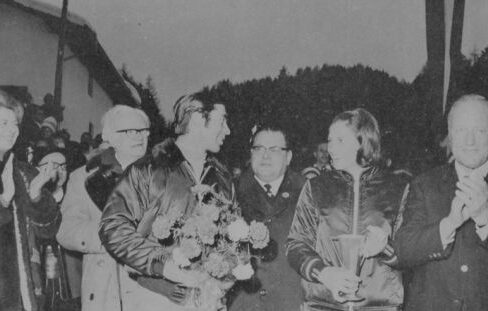
Sir Arnold Lunn (with glasses, at left). CSHFM Collection.
Sir Arnold Lunn (middle). CSHFM Collection.
Sign up for the Snow Times newsletter, and join a community that celebrates Canada’s pioneers and visionaries.
SUBSCRIBE